
Gutter Downspout Drainage Around Swimming Pools in Rocklin: How to Protect Your Pool Deck and Foundation
Gutter drainage near your swimming pool in Rocklin is one of those problems you don't notice until concrete cracks, algae blooms, or your pool deck turns into a slip hazard after every storm. Roof runoff from a typical 2,000-square-foot home can generate over 1,200 gallons per inch of rain — and if your downspouts dump that water anywhere near the pool, the damage adds up fast. This guide covers how to redirect gutter runoff away from your pool area, what drainage systems work best for Placer County backyards, and how to protect both your pool deck and foundation long-term.
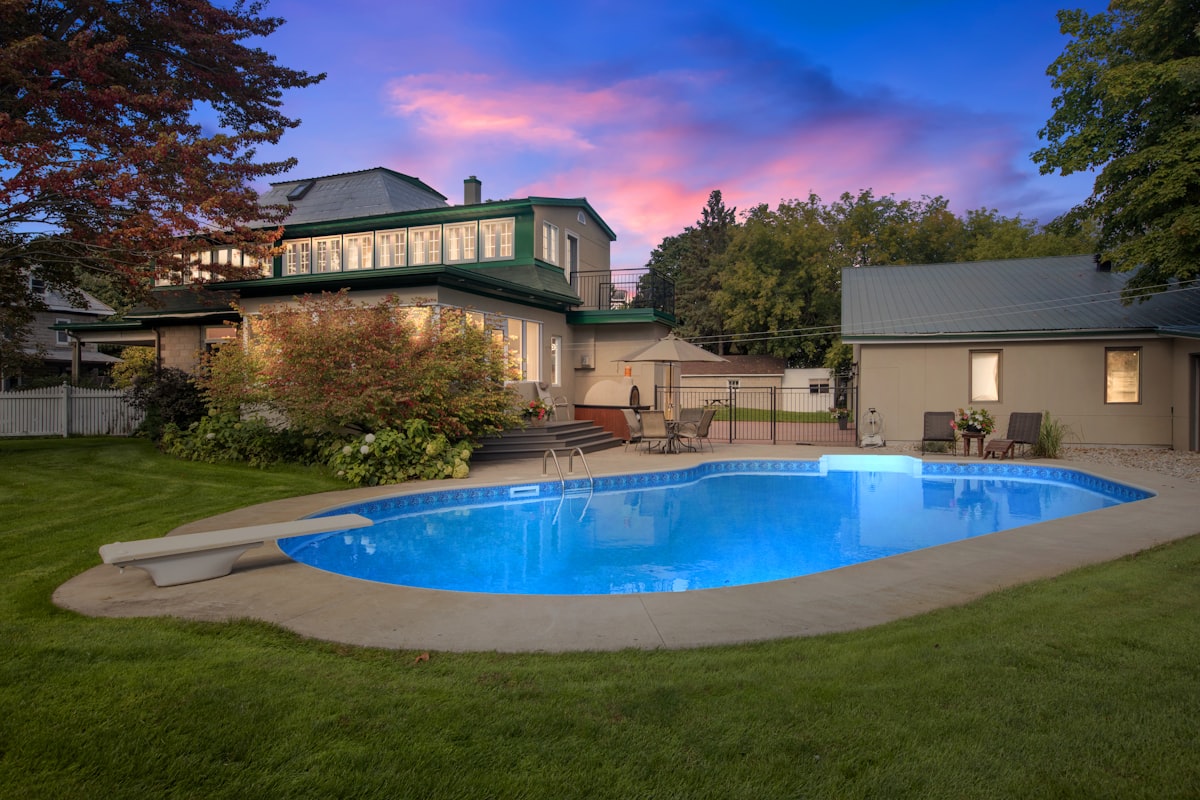
Proper gutter drainage keeps pool decks dry, foundations stable, and pool water clean.
Quick Answer
Downspouts should discharge at least 10 feet from your pool — ideally 15 feet on clay soil. Underground downspout extensions are the cleanest solution, routing roof runoff through buried pipe to a pop-up emitter or dry well far from the pool deck. Pair them with a perimeter channel drain to catch surface water. This prevents deck cracking, foundation erosion, and contaminated runoff from entering the pool.
Table of Contents
- Why Gutter Drainage Near Pools Is a Bigger Deal Than You Think
- 4 Types of Damage from Downspouts Draining Near a Pool
- How Far Should Downspouts Be from a Swimming Pool?
- Drainage Solutions for Pool-Area Downspouts in Rocklin
- Underground Downspouts: The Best Option for Pool Backyards
- Perimeter Pool Deck Drainage: Channel Drains and French Drains
- Rocklin Soil and Grading Challenges Around Pools
- Cost Estimates for Pool-Area Drainage in Rocklin
- Maintenance Schedule to Keep Pool Drainage Working
- FAQ: Gutter Drainage and Swimming Pools
Why Gutter Drainage Near Pools Is a Bigger Deal Than You Think
Rocklin gets most of its annual rainfall between November and March. When atmospheric rivers hit Placer County, a single storm can drop 2 to 4 inches of rain in 24 hours. For a home with 2,000 square feet of roof area, that translates to roughly 2,400 to 4,800 gallons of water funneled through your gutters and downspouts.
Now picture where that water goes. If even one downspout discharges onto or near your pool deck, every storm sends hundreds of gallons of dirty roof runoff across the concrete, into your landscaping, and potentially straight into the pool. The water carries shingle grit, leaf tannins, pollen, bird droppings, and air pollutants that wreck pool chemistry and stain surfaces.
The structural side is just as serious. Water pooling under or against a concrete pool deck causes subgrade erosion, void formation, and eventual cracking or heaving. On Rocklin's clay soils, that process accelerates because the soil expands when wet and shrinks when dry, creating a cycle that shifts concrete slabs seasonally. Homes we see in neighborhoods like Whitney Ranch, Stanford Ranch, and Sunset West frequently show this pattern when downspouts were aimed toward the backyard without considering the pool layout.
4 Types of Damage from Downspouts Draining Near a Pool
Understanding what goes wrong helps you prioritize the fix. Here are the four most common damage patterns Rocklin homeowners face when gutter downspouts discharge too close to a swimming pool.
1. Pool Deck Cracking and Heaving
Concentrated water flow erodes the compacted base beneath concrete pool decks. Once voids form, slabs settle unevenly or heave upward when clay soil expands. Repair costs for pool deck leveling and slab replacement in the Sacramento region typically range from $1,500 to $5,000 depending on the area affected, according to HomeAdvisor's 2025 cost data.
2. Pool Water Contamination
Roof runoff introduces phosphates, nitrates, and organic debris that fuel algae growth. According to the CDC, contaminated surface runoff is a recognized source of recreational water quality issues. Pool owners near uncontrolled downspouts report spending 20–40% more on chemicals and filter maintenance annually — easily $300 to $600 extra per season.
3. Foundation and Retaining Wall Erosion
Many Rocklin homes have the pool close to the house foundation or a retaining wall. Water flowing toward these structures saturates the soil and creates hydrostatic pressure. The American Society of Civil Engineers estimates that 25% of U.S. homes have some form of structural distress from expansive soils — a category that includes much of the Fiddyment and Alamo clay series found throughout Rocklin and western Placer County.
4. Slip Hazards and Staining
Repeated water flow across decorative concrete or pavers leaves mineral deposits, algae stains, and sediment trails. Beyond cosmetics, wet deck surfaces are a safety liability. The Consumer Product Safety Commission reports that slips and falls around swimming pools are among the top causes of non-drowning pool injuries.
Estimated Repair Costs: Pool-Area Water Damage in Sacramento Region
Sources: HomeAdvisor 2025 / Angi 2025 / Rocklin Gutter Guard estimates
Bottom line: Foundation repair alone can cost $5,000 to $15,000+ for Rocklin homes on clay soil. A complete drainage reroute around a pool — typically $2,000 to $6,000 — costs a fraction of a single major repair and prevents all four damage types. — HomeAdvisor 2025; Rocklin Gutter Guard project data
How Far Should Downspouts Be from a Swimming Pool?
The short answer: at least 10 feet from the pool edge, and 15 feet or more on flat lots with clay soil. Here is why those numbers matter and how they apply to different Rocklin yard layouts.
Building codes in most California jurisdictions require downspouts to discharge at least 5 feet from any foundation per IRC Section R801.3. But that is a minimum for houses — not a guideline for pool areas where you also need to protect the deck, the pool shell, and the surrounding grade. A 5-foot discharge next to a pool deck still sends water under the concrete.
Distance Guidelines by Yard Condition
- Well-draining sandy or loam soil, sloped away from pool: 10 feet minimum discharge distance
- Clay soil (common in Rocklin subdivisions), flat grade: 15 feet minimum, underground line preferred
- Pool adjacent to house foundation or retaining wall: 15–20 feet, route to opposite side of yard or to a dry well
- Hillside lot with pool below the roofline: Route downspouts to a daylight outlet downhill, well past the pool area
The key principle is that water should never flow toward the pool — not on the surface, and not through subsurface saturation. Underground downspout extensions give you control over where the water ends up, regardless of your yard's slope or the position of your pool relative to the house. For homes on hillside or sloped lots in Placer County, routing options are especially important because gravity works against you if the pool sits at a lower elevation than the roofline.
Drainage Solutions for Pool-Area Downspouts in Rocklin
Not every solution works for every backyard. The right choice depends on how many downspouts drain toward the pool area, the distance between the house and the pool, soil conditions, and whether you need to handle surface water in addition to roof runoff.
| Solution | Best For | Cost Range | Effectiveness |
|---|---|---|---|
| Underground Downspout Extensions | Roof runoff rerouting | $800 – $3,500 | High — eliminates source |
| Channel Drain (Pool Deck Edge) | Surface water interception | $1,200 – $4,000 | High for surface flow |
| French Drain (Perimeter) | Groundwater + surface combo | $1,500 – $5,000 | High for saturated soil |
| Dry Well | Discharge endpoint on flat lots | $800 – $2,500 | Moderate — soil dependent |
| Surface Downspout Extension | Temporary or low-budget fix | $20 – $100 | Low — trip hazard, limited reach |
Most Rocklin pool backyards benefit from a combination: underground downspout extensions to handle roof runoff plus a channel drain or French drain around the pool deck to catch surface water. The underground downspout guide covers the pipe sizing, slope, and discharge options in detail.
Underground Downspouts: The Best Option for Pool Backyards
Underground downspout extensions are the preferred method for rerouting gutter runoff away from swimming pools. They are invisible once installed, do not create trip hazards around the pool area, and give you precise control over where water discharges.
How It Works for Pool-Area Routing
A sealed adapter connects the existing downspout to a 4-inch solid PVC or corrugated pipe buried 12 to 18 inches below grade. The pipe runs along a path that avoids the pool shell, deck footings, and any underground utilities. At the discharge end, a pop-up emitter or daylight outlet releases water safely at a lower elevation or the property edge.
Pool-Area Routing Checklist
- Map all downspout locations on the pool side of the house
- Identify the pool shell, deck footings, gas/electric lines, and plumbing runs
- Choose a discharge point at least 10–15 feet from the pool edge
- Plan a pipe route with minimum 1% slope (1 inch per 8 feet)
- Install clean-outs at turns and at every 50 feet of straight run
- Use solid pipe only — perforated pipe leaks water into the soil near the pool
- Test flow before backfilling by running a garden hose through the system
Pro Tip: Always call 811 before digging around a pool area. Pool equipment runs include gas lines, electrical conduit, and plumbing that may be closer to the surface than expected. Many Rocklin pool installations have equipment pads within 10 feet of the house, and the utility runs between the pad and the pool can be as shallow as 6 inches.
If your gutters are already struggling to keep up during heavy rain, the gutter overflow solutions guide covers upsizing, adding downspouts, and other fixes that pair well with underground extensions. Solving overflow upstream means less volume and less pressure on the underground system.
Perimeter Pool Deck Drainage: Channel Drains and French Drains
Underground downspouts handle roof runoff, but surface water also needs a path away from the pool deck. During a heavy storm, water flows across hardscape, collects at low points, and can enter the pool or saturate the soil beneath the deck. Perimeter drainage systems intercept that flow before it causes problems.
Channel Drains (Trench Drains)
Channel drains are narrow, grated trenches installed flush with the pool deck surface, typically along the edge where the deck meets landscaping or at the threshold between the house and pool area. They collect sheet flow and route it through an underground pipe to a discharge point. Most pool builders in the Sacramento region recommend them as the primary surface drainage solution for pool decks.
French Drains
French drains sit below grade and are best for areas where subsurface water saturation is the main problem. They use perforated pipe surrounded by gravel and filter fabric to collect water from the soil and move it to a safe discharge point. Around pools, they work well along retaining walls, in side yards that stay soggy, and at the base of slopes that direct runoff toward the pool area.
The underground drainage and French drain installation guide covers the full specification for Rocklin soils, including pipe sizing, gravel depth, and fabric selection for clay-heavy conditions.
Rocklin Soil and Grading Challenges Around Pools
Rocklin sits on a mix of the Fiddyment and Alamo soil series, both of which have high clay content — typically 27% to 35% according to USDA Web Soil Survey data for Placer County. Clay soils drain slowly, hold moisture against structures, and expand and contract seasonally by measurable amounts.
That cycle is especially destructive around swimming pools. The pool shell is a rigid structure that does not move with the soil. The deck is a separate slab with its own footings. When clay soil shifts between wet and dry seasons, the gap between the deck and the pool coping widens and narrows, cracking grout joints and popping tiles.
Pool-Area Drainage Failures by Root Cause (Rocklin Service Data)
Based on Rocklin Gutter Guard field assessments | Percentage of service calls
Over a third of pool-area drainage issues we assess start with a downspout that was never rerouted after the pool was installed. Many Rocklin homes were built before the pool was added, and the original gutter system was designed for a grass yard, not a pool deck. Retrofitting the drainage is straightforward but requires intentional planning.
For a deeper look at how Rocklin's soil conditions affect foundation drainage overall, the clay soil and foundation drainage guide covers the science and the solutions.
Cost Estimates for Pool-Area Drainage in Rocklin
Costs depend on how many downspouts need rerouting, the length of trenching, soil conditions, and whether you are adding perimeter drains in addition to underground extensions. Here are typical price ranges for Rocklin-area projects based on our estimates and regional contractor data.
Pool-Area Drainage Project Costs (Rocklin, CA)
Based on Rocklin Gutter Guard estimates and regional contractor data
A single downspout reroute is often the best starting point. If one downspout is responsible for most of the water hitting your pool area, fixing that alone can eliminate 50% or more of the problem for under $1,200.
Full combo systems that include multiple underground lines plus perimeter drainage are more of an investment, but they protect the entire pool area from both roof runoff and surface water. The return on that investment is avoiding the repair costs charted above — a single foundation repair or deck resurfacing job eclipses the cost of prevention.
For context on overall downspout repair and replacement pricing, see the downspout repair and replacement guide.
Pool-Area Drainage Assessment
Not sure which downspouts are causing problems around your pool? We'll map your roof drainage, measure the flow path, and recommend the most cost-effective fix for your backyard layout.
Maintenance Schedule to Keep Pool Drainage Working
A drainage system is only as reliable as its maintenance. Debris, sediment, and root intrusion can reduce flow over time, especially in Rocklin where oak catkins, pine needles, and leaf litter clog gutters seasonally. Follow this schedule to keep everything flowing.
Seasonal Maintenance Checklist
Fall (October–November) — Pre-Storm Prep
- Clean all gutters and downspouts on the pool side of the house
- Flush underground lines with a garden hose through the clean-outs
- Check pop-up emitters for sediment blockage or landscaping overgrowth
- Inspect channel drain grates for debris and clear as needed
Winter (January–February) — Mid-Season Check
- After any storm dropping 2+ inches, visually inspect discharge points
- Look for new ponding areas near the pool deck
- Clear any debris from channel drain grates
Spring (March–April) — Post-Storm Assessment
- Inspect pool deck for new cracks, settlement, or gaps at the coping line
- Flush underground lines again after the last storm cycle
- Check for root intrusion at clean-out access points
- Clean gutters of oak catkins and spring pollen
Summer (June–August) — Dry Season Review
- Inspect for soil shrinkage gaps around pool deck and foundation
- Verify pop-up emitters close fully when dry (to prevent pest entry)
- Plan any system upgrades before the next rainy season
Installing gutters on patio covers near the pool is another step many homeowners overlook. Solid-roof patio covers shed water just like the main roof, and if that runoff hits the pool deck, you have the same problem from a second source.
Real Scenario: Whitney Ranch Pool Deck Rescue
A homeowner in Whitney Ranch called us after noticing a widening crack across their pool deck and recurring green algae blooms that their pool service could not explain. Two downspouts from the second-story roofline discharged into splash blocks less than 4 feet from the deck edge. Every storm, hundreds of gallons of roof water flowed across the concrete and into the pool.
The fix involved rerouting both downspouts into underground 4-inch solid PVC, running 22 feet along the fence line, and discharging through a pop-up emitter in the far corner of the yard. We also installed a 16-foot channel drain along the house-side edge of the deck to catch any remaining surface flow.
Total project cost was just under $3,800. The deck crack stabilized once the soil beneath it stopped cycling between saturated and dry. The pool service confirmed that chemical usage dropped back to normal within two months. A fraction of what foundation leveling or deck replacement would have cost.
Landscaping That Supports Pool-Area Drainage
What you plant and how you grade the soil around your pool matters almost as much as the drainage hardware. A few landscaping decisions can either help or undermine your drainage investment.
- Grade soil away from the pool deck at a minimum 2% slope (1/4 inch per foot) for at least 6 feet
- Use decomposed granite or gravel beds between the discharge point and the property edge to aid infiltration
- Avoid planting trees with aggressive root systems within 10 feet of underground drain lines — willows, elms, and silver maples are the worst offenders
- Mulch landscaping beds near the pool to prevent topsoil from washing onto the deck during storms
- Install root barriers if existing trees are within 8 feet of underground pipes
For creative ways to make downspout discharge areas look intentional rather than utilitarian, see the downspout landscaping ideas guide. Rain gardens, dry creek beds, and gravel swales all work well as discharge zones while adding curb appeal to the backyard.
Protect Your Pool, Deck, and Foundation
Rocklin Gutter Guard designs underground downspout systems, channel drains, and complete backyard drainage plans built around your pool layout. We handle the routing, the trenching, and the cleanup — so you get a dry deck and clean pool water without the construction headache.
FAQ: Gutter Drainage and Swimming Pools
How do I redirect gutter water away from my pool?
The most reliable method is underground downspout extensions. Buried solid pipe routes roof runoff from your gutters to a discharge point at least 10 feet from the pool, such as a pop-up emitter, dry well, or daylight outlet at a lower elevation. Surface splash blocks work for short distances but create trip hazards and are less effective during heavy Rocklin storms.
Can gutter runoff damage my swimming pool?
Yes. Roof runoff carries shingle grit, leaf tannins, bird droppings, and air pollutants into pool water. This disrupts chemical balance, stains surfaces, clogs filters, and raises maintenance costs. The volume during a winter storm can also overwhelm pool overflow drains and flood the surrounding deck.
Should downspouts drain near a pool deck?
No. Downspouts should discharge at least 6 to 10 feet away from any pool deck or hardscape. Water pooling on or under concrete pool decks causes cracking, heaving, and erosion of the subgrade. On Rocklin's clay soils, trapped moisture accelerates seasonal deck movement.
How far should downspouts be from a swimming pool?
At least 10 feet from the pool edge. On clay soil or flat lots — common in Rocklin — aim for 15 feet or more. Underground downspout extensions make reaching that distance easy without visible pipes crossing your backyard.
What is the best drainage system for a backyard with a pool in Rocklin?
A combination of underground downspout extensions (for roof runoff) and a channel drain or French drain around the pool deck (for surface water). Pop-up emitters or dry wells at the discharge end keep the yard clean and functional. Most Rocklin pool backyards need both systems working together for full protection.
Does roof runoff affect pool water chemistry?
Significantly. Rain carries phosphates, nitrates, and trace metals from roofing materials and air pollution. These contaminants fuel algae growth, raise chlorine demand, and stain pool plaster. Redirecting downspouts away from the pool is the most effective way to maintain consistent water chemistry year-round.