
Gutter Splash Guards: Complete Guide for Rocklin Homeowners (2026)
A gutter splash guard is a small metal or plastic barrier that mounts on the outer edge of your gutter to stop water from overshooting at high-flow points. If you have ever walked outside during a Rocklin rainstorm and seen water pouring over one specific spot on your gutters while the rest work fine, that spot almost certainly needs a splash guard.
Rocklin receives roughly 22 inches of annual rainfall, but the majority falls between November and March in intense bursts. During atmospheric river events, rainfall rates can exceed 1–2 inches per hour, overwhelming gutters at roof valleys and corners. Splash guards cost $5–$25 each and take minutes to install, yet they prevent the kind of concentrated water damage that leads to foundation erosion, stained siding, and flooded flower beds.
Already dealing with overflow during heavy rain? See our 8 causes and solutions for gutter overflow in Rocklin for a full diagnostic.

Photo by Luke Southern on Unsplash
TL;DR
Gutter splash guards are small barriers ($5–$25 each) that stop water from overshooting your gutters at roof valleys, corners, and steep-pitch runoff points. Aluminum valley splash guards are the best choice for Rocklin homes because they handle high-velocity water flow, resist 100°F+ heat, and last 20+ years. Most homes need 4–8 guards total, making this one of the cheapest gutter fixes available. Skip plastic guards in our climate -- they warp in summer heat.
What Is a Gutter Splash Guard and How Does It Work?
A gutter splash guard is a raised metal or plastic flange that attaches to the outside edge of your gutter trough. It extends 2–4 inches above the gutter lip, creating a wall that catches water before it can overshoot.
The physics are straightforward. Water flowing off a steep roof or through a valley hits the gutter at high velocity. Standard 5-inch K-style gutters have a front lip only about 3 inches tall. When water volume exceeds what that lip can contain, it goes over the side. A splash guard raises the effective wall height at the exact point where overflow happens.
The International Association of Certified Home Inspectors (InterNACHI) notes that roof valleys concentrate approximately 2.5 times the normal water volume into a single gutter section. That multiplied flow is why valleys are the number one location for gutter overflow -- and why splash guards exist.
How a Splash Guard Redirects Water
Splash guards raise the effective gutter wall height at overflow points, redirecting high-velocity water back into the trough instead of letting it overshoot onto your foundation and landscaping.
Where Do You Need Splash Guards on a Rocklin Home?
Not every linear foot of gutter needs a splash guard. You install them at specific problem points. Here are the most common locations on Rocklin homes:
- Roof valleys -- the single most common overflow point; two roof planes funnel water into one spot
- Inside and outside corners -- water accelerates around turns and overshoots the outer edge
- Below steep roof pitches -- homes in Stanford Ranch and Whitney Ranch often have 8/12 or steeper pitches that launch water past the gutter
- Second-story-to-first-story transitions -- upper roof runoff hits lower gutters at increased velocity
- Above walkways and entryways -- even minor overflow here creates a safety issue and damages hardscape
For a deeper look at the valley problem specifically, our roof valley gutter overflow fix guide ranks five solutions by cost and effectiveness.
Types of Gutter Splash Guards: Which One Fits Your Gutters?
Three main types of gutter splash guards cover nearly every residential scenario. The right one depends on where the overflow is happening and what your gutters are made of.
Pros
- Handles high-velocity valley runoff
- Matches aluminum gutter finish
- No-visible-screw installation available
- Withstands 100°F+ without warping
Cons
- Requires precise positioning
- May need custom bending for steep valleys
Pros
- Easy to install on straight sections
- Available in multiple heights
- Works on K-style and half-round gutters
- Budget-friendly option
Cons
- Plastic versions warp in Sacramento heat
- Less effective on high-volume valley points
Pros
- Pre-bent to fit corner angles
- Prevents overflow at seam-heavy areas
- Stainless steel resists corrosion long-term
- Reduces fascia board water exposure
Cons
- More expensive per piece
- Fewer color options than straight guards
Pro Tip
Skip plastic splash guards in the Sacramento Valley. PVC warps above 100°F, and Rocklin regularly hits 105–110°F in summer. A plastic guard that works fine in Oregon will curl and detach by August in Placer County. Aluminum costs a few dollars more per piece and lasts three to four times longer.
Gutter Splash Guard Cost: What Rocklin Homeowners Pay
Splash guards are one of the most affordable gutter accessories. Here is a realistic cost breakdown for a typical Rocklin home with 6 overflow points.
| Item | Plastic | Aluminum | Stainless Steel |
|---|---|---|---|
| Cost per guard | $5–$10 | $8–$15 | $15–$25 |
| 6 guards (DIY) | $30–$60 | $48–$90 | $90–$150 |
| Pro install (6 guards) | $80–$160 | $100–$200 | $140–$250 |
| Expected lifespan | 5–8 years* | 20+ years | 25+ years |
| Rocklin heat resistance | Poor (warps at 100°F+) | Excellent | Excellent |
| Recommendation | Not recommended | Best value | Premium option |
*Plastic lifespan shortened in Sacramento Valley climate due to UV exposure and thermal cycling. Cost estimates based on 2026 retail and local contractor pricing.
For comparison, repairing foundation erosion from a single season of concentrated overflow runs $1,000–$5,000+ depending on severity. A $100 set of aluminum splash guards prevents that damage entirely.
Curious about broader gutter costs? Our Rocklin gutter installation cost guide covers full system pricing from gutters to downspouts.
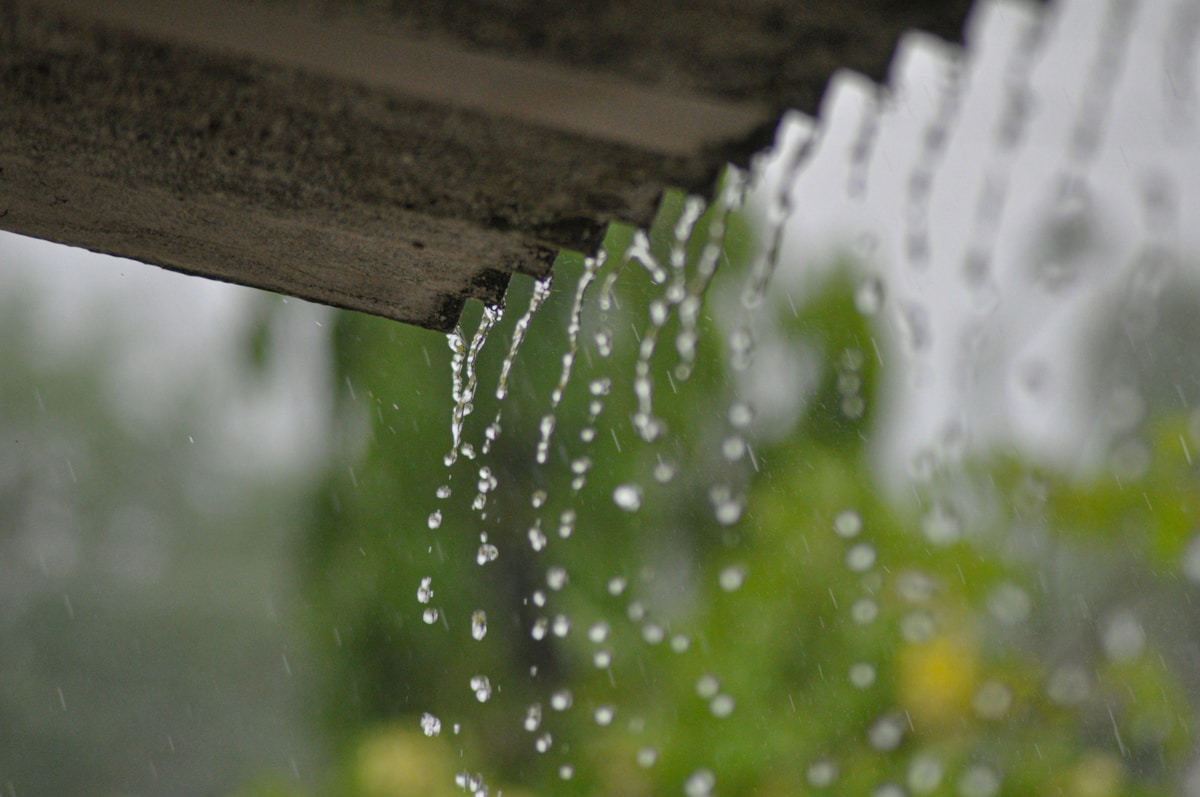
Photo by Kenneth Adams on Unsplash
How to Install Gutter Splash Guards (Step-by-Step)
Installing gutter splash guards is a manageable DIY project for single-story homes. The entire job takes 20–30 minutes per guard. Here is the process we follow on Rocklin installations:
Identify Your Overflow Points
Run a garden hose at full pressure along each roof section. Watch where water spills over the gutter edge. Mark those spots with painter's tape on the gutter lip. Most Rocklin homes have 4–8 overflow points, typically at valleys and where upper roofs drain onto lower gutters.
Clean the Gutter Edge
Remove any debris, dirt, or oxidation from the outer gutter lip at each marked location. The splash guard needs a clean surface to seat flush. Wipe with a rag or use a wire brush on heavily oxidized aluminum.
Position the Splash Guard
Place the guard against the outer edge of the gutter, centered directly below where water overshoots. The raised portion extends 2–4 inches above the gutter lip. For valley splash guards, the center of the guard aligns with the center of the valley runoff stream.
Pre-Drill and Fasten
Drill two 1/8-inch pilot holes through the splash guard and gutter lip. Secure with stainless steel sheet metal screws or pop rivets. Apply a bead of gutter sealant (like Geocel 2320) around each fastener to prevent leaks. Stainless fasteners prevent galvanic corrosion between dissimilar metals.
Test with Water
Run the hose again at full blast along the same roof section. Water should now redirect into the gutter trough instead of overshooting. If overflow still occurs, the guard may need repositioning or you may need a taller guard for that particular spot.
Ladder Safety Warning
Two-story splash guard installation requires working at 15–20 feet on a ladder. Falls from ladders cause over 500,000 injuries per year in the U.S. according to the American Academy of Orthopaedic Surgeons. If your overflow points are on a second story, hire a professional. It is not worth the risk.
For more on ladder safety during gutter work, see our gutter cleaning ladder safety guide.
Gutter Splash Guards vs. Splash Blocks: What's the Difference?
These terms get confused constantly. They solve different problems at different locations in your drainage system:
- Mount on the outer edge of the gutter
- Prevent water from overshooting the trough
- Installed at roofline level (high up)
- Cost: $5–$25 each
- Sit on the ground below downspouts
- Redirect water away from the foundation
- Installed at ground level (no ladder needed)
- Cost: $8–$30 each (concrete or plastic)
Many Rocklin homes benefit from both. Splash guards catch overflow at the gutter level, while splash blocks at the base of downspouts prevent erosion where water exits the system. If your home has clay soil (common in Placer County), splash blocks are especially important because clay drains poorly and pools water near your foundation.
For a permanent ground-level solution beyond splash blocks, consider underground downspout drainage to channel water entirely away from your foundation.
Do Splash Guards Work with Gutter Guards and Gutter Screens?
Yes, but they serve different purposes. Gutter guards (mesh screens, micro-mesh systems, or solid covers) keep debris out of the trough. Splash guards prevent water from overshooting the gutter at high-flow points. You may need both.
Here is how they work together:
- Gutter guards sit on top of the gutter opening, filtering debris while letting water through
- Splash guards mount on the outer lip of the gutter, catching water that tries to overshoot before it reaches the guard surface
- At valley points, water hits the gutter guard at high velocity -- some micro-mesh systems handle this well, but many still allow overshoot at the initial impact point
- A valley splash guard behind the gutter guard catches any water that bounces off or overshoots the mesh surface
Splash Guard Compatibility by Gutter Guard Type
Wondering whether gutter guards alone are enough? Our are gutter guards worth it for Rocklin homes guide breaks down the real-world performance.
Photo by Taylor Hammersla on Unsplash
Why Rocklin Homes Need Splash Guards More Than Most
Three factors make splash guards especially important in Rocklin and throughout Placer County:
Average Monthly Rainfall in Rocklin (inches)
Data based on Weather Spark average climate data for Rocklin, CA. Over 80% of annual rainfall arrives between October and March.
Concentrated Winter Rainfall
Rocklin gets roughly 22 inches of rain per year, but over 80% falls between October and March. Individual storms during atmospheric river events can dump 1–2 inches in a few hours. That concentrated intensity is what overwhelms gutters at valley points -- not the annual total.
Steep Roof Pitches in Newer Subdivisions
Homes in Stanford Ranch, Whitney Ranch, and Sunset Whitney (Rocklin's largest subdivisions) commonly feature 7/12 to 10/12 roof pitches. Steeper pitches accelerate water velocity, increasing the force at which runoff hits the gutter. A roof pitch of 8/12 or steeper almost always requires splash guards at valleys.
Oak Tree Canopy and Debris
Placer County's oak tree canopy means gutters accumulate debris faster than average. When debris partially blocks a gutter section, water backs up and finds the path of least resistance -- over the side. Splash guards buy you time between cleanings by keeping overflow in the trough even when debris is present. But they are not a substitute for regular cleaning; check our Rocklin gutter cleaning schedule for recommended intervals.
We install splash guards throughout Rocklin and surrounding cities. See our Rocklin gutter services page for the full range of solutions we offer in the area, or browse Roseville gutter services if you are nearby.
Not Sure Where Your Gutters Are Overflowing?
Our team inspects your roofline, identifies every overflow point, and recommends the right splash guard type for each location. Inspections are free and typically take 30 minutes.
Request a Free Inspection5 Common Gutter Splash Guard Mistakes to Avoid
Splash guards are simple, but these installation errors reduce their effectiveness:
Using plastic guards in hot climates
PVC warps above 100°F. In Rocklin's 105–110°F summer peaks, plastic guards deform within one to two seasons and pull away from the gutter edge.
Positioning off-center from the overflow point
A guard shifted even 4–6 inches from the actual overflow spot misses the water stream entirely. Always test with a hose before drilling pilot holes.
Skipping sealant on fastener holes
Every screw or rivet hole in your gutter is a potential leak point. A dab of gutter sealant prevents water from weeping through the fastener holes and dripping down the fascia.
Installing a guard that is too short
A 2-inch guard works on low-pitch roofs with moderate rain. For steep pitches (7/12+) or heavy valley flow in Rocklin, you need a 3–4 inch guard. Measure the overflow height with a hose test before buying.
Relying on splash guards instead of fixing the root cause
Splash guards handle natural overflow at high-flow points. If your gutters overflow everywhere, the problem is likely undersized gutters, improper slope, or clogged downspouts -- not a missing splash guard.
For a broader look at installation pitfalls, see our guide on common gutter installation mistakes in Rocklin.
When Splash Guards Are Not Enough: Bigger Fixes
Splash guards solve localized overflow. If you have systemic overflow across multiple gutter runs, the underlying issue may require a more substantial fix:
Overflow Fix Decision Guide
If you are unsure whether splash guards will solve your specific issue, see our 5-inch vs. 6-inch gutter sizing guide to determine whether your gutters are properly sized for your roof area.
Frequently Asked Questions About Gutter Splash Guards
Are gutter splash guards necessary?
Splash guards are necessary at any gutter point where water overshoots during rain. Roof valleys, corners, and steep-pitch runoff areas are the most common locations. In Rocklin, with concentrated winter rainfall and many homes featuring steep roof pitches, most homes have at least 3–4 spots that benefit from splash guards.
Do gutter splash guards actually work?
Yes. Aluminum splash guards effectively redirect water that would otherwise overshoot the gutter back into the trough. They work especially well at valley points where InterNACHI estimates water volume runs approximately 2.5 times higher than standard gutter sections.
How much do gutter splash guards cost?
Individual guards cost $5–$25 depending on material. Aluminum guards ($8–$15 each) offer the best value for Rocklin homes. Professional installation of 6 guards runs $100–$200 total, including hardware and sealant.
Which way do gutter splash guards go?
Splash guards mount on the outer (front) edge of the gutter. The raised portion extends upward 2–4 inches above the gutter lip, facing the roof. Position the guard centered directly below the overflow point for maximum effectiveness.
Can you use gutter splash guards with gutter guards?
Yes. Gutter guards keep debris out of the trough; splash guards prevent water from overshooting the gutter. They work together. Splash guards mount on the outer gutter lip below or adjacent to the gutter guard system. Most micro-mesh and foam gutter guards are fully compatible with separate splash guards.
Stop Gutter Overflow at Your Rocklin Home
We inspect your roofline, identify every overflow point, and install the right splash guards for each location. Most jobs are done in under two hours. Free estimates, no pressure.