
Rocklin Oak Tree Ordinance & Gutters: What Homeowners Must Know Before Trimming, Cutting, or Installing Gutter Guards (2026)
Rocklin's oak tree ordinance is the single most important local rule you need to understand before doing any gutter work on a Rocklin home with native oaks nearby. The ordinance protects oaks with a trunk diameter of 6 inches or more measured 4.5 feet above the root crown, elevates heritage protection at 24 inches or more, and treats unpermitted removal as a code violation subject to mandatory mitigation, in-lieu fees, and possible administrative penalties.
In practical terms for Rocklin homeowners, that means you cannot simply cut back the oak canopy overhanging your gutters to reduce leaf drop, and you cannot have a contractor take down a protected oak for easier roof access without the City of Rocklin's Community Development Department reviewing it first. Every gutter cleaning decision, gutter guard choice, and downspout placement in an oak-shaded Rocklin neighborhood bends around this ordinance.
Need gutter guards or debris-tolerant service that works under protected oaks? Request a free Rocklin oak-friendly gutter assessment or read our oak tree gutter guard guide first.
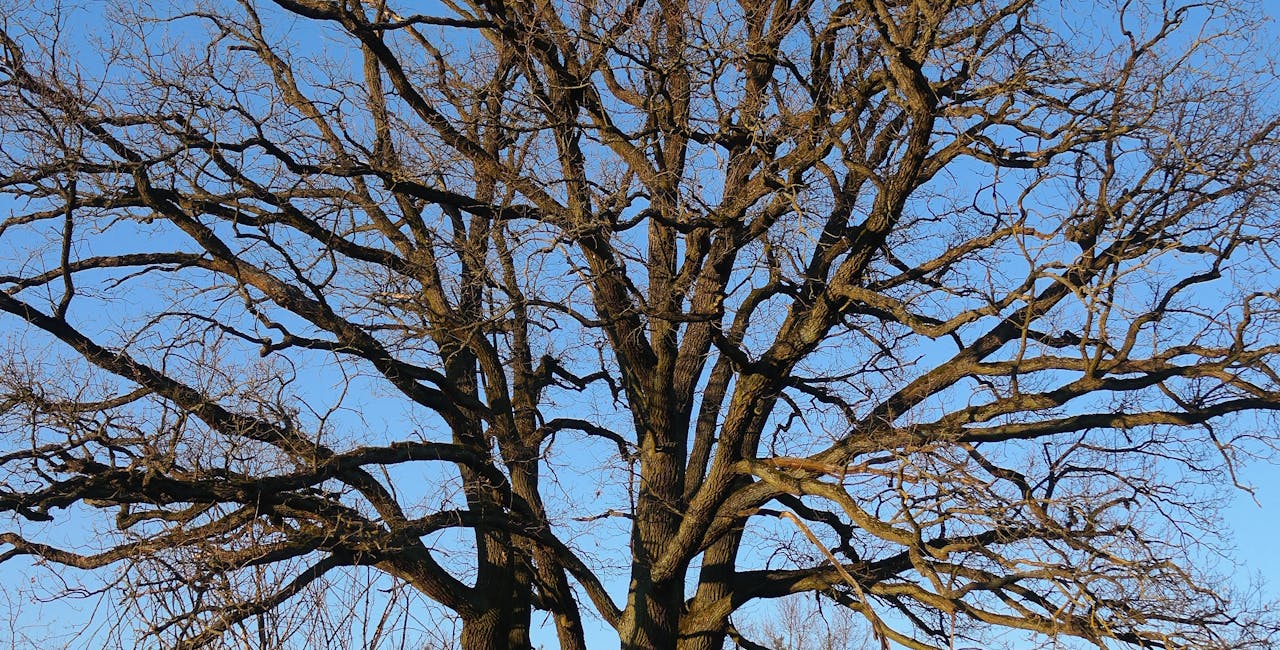
Native oaks over a Rocklin rooftop are protected by city ordinance. Gutter debris has to be managed without cutting the canopy.
TL;DR
Rocklin protects native oaks 6 inches in diameter or larger, and heritage oaks 24 inches or larger. You cannot remove, significantly trim, or encroach inside the protected zone of one without a permit from the City of Rocklin. For gutter work that means three rules: (1) plan on living with the debris, because canopy reduction is not a legal debris-reduction strategy; (2) install micro-mesh gutter guards, which solve the problem without touching the tree; and (3) schedule three to four cleanings per year instead of two under any protected oak. Unpermitted removal of a non-heritage native oak triggers mitigation of two 5-gallon replacement oaks per tree or an in-lieu fee, and heritage oaks require five replacements per tree. Get a Rocklin gutter guard quote before you call a tree service.
In This Guide
- What the Rocklin Oak Ordinance Actually Covers
- The Three Native Oaks Protected in Rocklin
- Gutter Work Rules Near a Protected Oak
- Permits, Mitigation, and In-Lieu Fees
- The Gutter Guard Strategy That Keeps You Legal
- Cleaning Schedule for Oak-Canopied Rocklin Homes
- Rocklin Neighborhoods With the Highest Oak Density
- Hiring a Contractor Who Actually Reads the Ordinance
- Frequently Asked Questions
What the Rocklin Oak Tree Ordinance Actually Covers
Rocklin's oak tree ordinance is administered by the Community Development Department and regulates two tiers of protection based on trunk diameter measured 4.5 feet above the root crown (the forestry standard known as diameter at breast height, or DBH).
- Protected native oak: any oak of a species native to the Rocklin area with a trunk diameter of 6 inches or more at 4.5 feet above the root crown.
- Heritage oak: any native oak with a trunk diameter of 24 inches or more at 4.5 feet above the root crown. Heritage status carries stronger review and higher mitigation requirements.
- Not regulated: oak trees less than 6 inches in diameter, non-native oak species (verify before cutting), and all non-oak tree species on private residential property.
Per the City of Rocklin's published guidance, the city does not charge a fee to issue oak tree removal permits. That is a deliberate choice designed to eliminate the financial incentive for unpermitted removal. The real cost sits in mitigation: replacement plantings or in-lieu fees if the permit is granted.
The ordinance does not prohibit routine maintenance pruning of small deadwood or hazard limbs. But any cut that removes a major scaffold limb, reduces canopy volume meaningfully, or is made within the critical root zone of the tree can trigger review, especially if the work happens during a construction or roofing project where a permit is already on file.
Rocklin Oak Protection Tiers at a Glance
Knowing which tier your oak falls into changes the entire gutter maintenance plan. A Rocklin home with one 8-inch Interior Live Oak in the front yard has one set of options. A home with three mature Valley Oaks over the back roof — all heritage-sized — has a very different set.
The Three Native Oaks You Will Meet in Rocklin
Three oak species account for nearly all of the protected canopy inside Rocklin city limits. Each drops debris on a different schedule, and each produces a different mix of leaves, catkins, and acorns that ends up in gutters.
| Species | Leaf Habit | Peak Debris Window | Gutter Impact |
|---|---|---|---|
| Interior Live Oak Quercus wislizeni | Evergreen (drops year-round) | Spring catkins, summer heat drop, fall leaflet drop | Constant small-leaf load — worst for screen-type guards |
| Valley Oak Quercus lobata | Deciduous (drops once hard in fall) | October through early December | Large lobed leaves jam downspout elbows |
| Blue Oak Quercus douglasii | Deciduous (drops during summer drought stress) | July through September, again in November | Two-wave drop catches homeowners off schedule |
Interior Live Oak is the species most Rocklin homeowners curse when they look at their gutters. It does not drop all its leaves at once like a Valley Oak — it sheds quietly and constantly. That habit is why so many Rocklin gutter cleaning calls come in during July and August, not just November. Heat stress triggers a second shed on Interior Live Oaks, and the small waxy leaflets slide right through standard screen guards.
Valley Oaks are the giants. A mature Valley Oak in a Rocklin backyard can reach 60 to 100 feet and cast a dripline that covers most of a single-story roof. When one of these drops in October, a clean gutter can be half full inside a weekend.
Before any gutter or tree work, verify species and diameter. A gutter guard system tuned to California native oaks handles all three differently, and the right material spec depends on which trees sit over your roofline.
What You Can and Cannot Do Near a Protected Oak During Gutter Work
This is the section every Rocklin homeowner and contractor needs to read before the ladder goes up. The ordinance does not shut down gutter work. It regulates what happens to the tree and its critical root zone, not what happens on the gutter itself.
Allowed Without an Oak Permit
- Installing gutter guards on an existing gutter, including micro-mesh, surface-tension, and reverse-curve systems.
- Replacing existing gutters along the same roofline with new aluminum, steel, or copper troughs.
- Installing, repairing, or extending downspouts along exterior walls.
- Routine gutter cleaning using ladder or lift equipment staged outside the dripline.
- Removing deadwood less than 4 inches in diameter from the oak using a certified arborist.
- Emergency limb removal after a storm when the limb is already broken and posing a hazard (document with photos).
Requires a Permit or Planning Review
- Removing a protected oak entirely, for any reason, including to gain roof or gutter access.
- Major canopy reduction — cutting back more than a small fraction of the tree to stop leaf drop into gutters.
- Cutting a scaffold limb 4 inches or larger in diameter, even if the limb overhangs your roof.
- Heavy equipment staging (boom lifts, dumpsters, material stacks) inside the tree's dripline.
- Grading, trenching, or compacting soil in the critical root zone for a new downspout drain line.
- New construction additions (ADUs, patio covers, solar awnings) that change the dripline relationship.
Hard Stop — Do Not Do These
- Hire a non-licensed tree trimmer to "top" a protected oak over your gutters.
- Cut a protected oak down without a permit and report it after the fact.
- Let a roofing or gutter contractor cut limbs "as part of the scope" without documentation from an arborist and Community Development.
- Root-prune or deep-trench inside the dripline for a French drain without review.
- Stack demolition debris or dispose of paint, solvents, or mortar inside the critical root zone.
Pro tip: When you request a Rocklin gutter installation estimate, ask the contractor how they handle equipment staging near protected oaks. A legitimate local installer will walk the dripline before pricing, plan to keep ladders and dumpsters outside the critical root zone, and document the setup. That conversation tells you the contractor has worked in Rocklin before and understands the ordinance.
Permits, Mitigation, and In-Lieu Fees: How the Numbers Work
When a Rocklin homeowner does need to remove or significantly alter a protected oak — for example, if a heritage Valley Oak is structurally failing and threatens the house — the permit itself is free. The real financial commitment is the mitigation tied to the permit.
| Situation | Permit | Replacement Requirement | In-Lieu Fee Alternative |
|---|---|---|---|
| Healthy native oak, 6"–23" DBH | Required, no fee | Two 5-gallon native oaks per tree removed | Pay per-tree fee into city mitigation fund |
| Heritage oak, 24"+ DBH | Required, planning review | Five 5-gallon native oaks per tree removed | Pay higher per-tree fee into fund |
| Dead or dying oak | Required, arborist letter | Typically waived | Not applicable |
| Emergency hazard (post-storm) | After-the-fact review | Case-by-case, document with photos | Possible if stabilization needed |
| Unpermitted removal | Violation | Mandatory mitigation + admin penalty | Not an option |
Specific in-lieu dollar amounts are set by the Community Development Department and can change. Current figures should be confirmed directly with the city's Planning Division at (916) 625-5160 before any oak work. The structure of the rule, though, has held steady for years: replacement in-kind or cash into the fund.
Commercial properties, multi-family buildings, and properties with active development entitlements face a more involved review than single-family residential. For a standard Rocklin single-family home doing gutter work, the oak angle is almost always a simple question: do we touch the tree or not? If the answer is no, no oak permit is needed. If the answer is yes, the process starts before any ladder or saw comes out.
Mitigation Burden by Tree Size (Replacement 5-Gallon Oaks Required)
The Gutter Guard Strategy That Keeps You Legal and Protects Your Roof
Because the ordinance takes canopy reduction off the table as a debris-control strategy, the real lever Rocklin homeowners have is the gutter itself. The right guard system, sized for the right oak species, does the work that in a non-regulated town might be done by a chainsaw.
Ranked Gutter Guard Options for Oak-Canopied Rocklin Homes
- Stainless micro-mesh (top choice under Interior Live Oak): holes typically in the 275-micron range stop leaflets, catkins, and pollen clumps without blinding under oak tannin drip. Expect premium pricing but the longest serviceable life.
- Surface-tension reverse-curve (good for Valley Oak leaf loads): large deciduous leaves slide off the curve and fall to the ground, while water curls into the gutter. Works best on steeper roof pitches.
- Perforated aluminum (budget pick, not recommended under live oaks): passes small debris through and needs annual service. Can work under one modest oak but fails quickly under multiple mature trees.
- Foam inserts (avoid under any oak): collect oak tannins, rot, and become a seed bed for volunteer growth. Rocklin gutter installers see these fail within two seasons under live oak.
For a homeowner with one heritage Valley Oak and one heritage Interior Live Oak over a single-family roof, a stainless micro-mesh system is almost always the right call. It is the one option that handles both species simultaneously and reduces the cleaning burden enough to stop thinking about canopy reduction as a workaround.
Rocklin-specific note: When you see a contractor quote a "lifetime" guard on a live-oak home, ask about performance under tannin drip and pollen cement specifically. Generic lifetime warranties rarely distinguish between a suburban Roseville lot with two small ornamentals and a Stanford Ranch lot sitting under three heritage Interior Live Oaks. The products behave very differently.
For a complete walk-through of product selection, see our gutter screens vs micro-mesh comparison, the rundown of why gutter guards fail in Rocklin, and the guide to how gutter guards work and what maintenance they need.
Cleaning Schedule for Rocklin Homes Under Protected Oaks
A home under a protected oak needs more cleanings than a home on an open lot. The canopy cannot be thinned, so the debris has to be managed on the gutter side with a tighter maintenance interval.
Rocklin Native Oak Debris Drop Timeline (by Species)
Three-Visit Annual Plan (Typical Rocklin Oak Home)
- Late May: clear spring catkin, pollen, and small leaflet load before summer heat bakes it into the trough. Flush downspouts.
- Late September: clear summer heat-stress drop from Interior Live Oak and Blue Oak. Inspect joints and hangers for UV damage.
- Early January: clear the Valley Oak drop, verify downspouts before atmospheric river season peaks. Check for pest nests.
Four-Visit Plan (Two or More Heritage Oaks Over the Roof)
- April: spring pollen and catkin flush.
- August: mid-summer heat-stress drop, pre-wildfire season inspection.
- Late October: Valley Oak leaf drop.
- January: final clear before peak rain, pest nest check.
For most Rocklin homes, a pre-paid annual plan is cheaper per visit than on-demand calls and ensures the schedule actually happens. Our breakdown of annual gutter maintenance plans in Placer County shows how the math works out for different tree densities.
Rocklin Neighborhoods With the Highest Protected Oak Density
Not every Rocklin subdivision has the same oak exposure. Newer tract developments off Whitney Boulevard generally have smaller ornamental trees. Older ranches, larger custom lots, and subdivisions that preserved native trees during build-out have the heaviest oak canopies and therefore the highest overlap with the ordinance.
| Neighborhood | Typical Lot | Oak Density | Ordinance Exposure |
|---|---|---|---|
| Stanford Ranch | 6,000–10,000 sq ft | Moderate to high (preserved natives) | High — many heritage-sized |
| Sunset West / Sunset Ridge | Varies, often 1/4 acre+ | High (native canopy preserved) | High |
| Clover Valley | 1/3–1+ acres | Very high (rural character) | Very high |
| Whitney Ranch | Tract-standard | Low to moderate | Moderate |
| Park Drive / Old Rocklin | Established, mixed lots | Moderate to high (mature trees) | Moderate |
Homes in Clover Valley, Stanford Ranch, and Sunset West are the most likely to sit under a heritage oak. These are also the Rocklin neighborhoods where our crews encounter the most "we already cut the tree" surprises from previous homeowners, which can come back on a seller during a real estate inspection. If a gutter inspection turns up evidence of recent heavy oak limb cuts and no permit history, the buyer's agent is going to notice.
For a deeper look at how Rocklin neighborhoods differ, see our neighborhood-by-neighborhood gutter guide covering Stanford Ranch, Whitney Ranch, Sunset West, and Clover Valley.
How to Hire a Gutter Contractor Who Actually Reads the Ordinance
The cheapest way to get in trouble with Rocklin's oak ordinance is to hire a contractor who has never worked in Rocklin before and does not know it exists. Pricing alone will not tell you the difference. Questions during the estimate will.
Ask These Five Questions Before Signing
- Have you worked on homes in Rocklin with protected oaks in the last 12 months? Ask for two addresses.
- Where will you stage the ladder and dumpster relative to the dripline? They should answer without hesitation.
- If a limb needs to come down for gutter access, what is your process? The right answer: pause, call a certified arborist, and check permit status.
- What is your plan if I want guards installed on a section of roof directly under a heritage oak? Micro-mesh should be in the answer.
- Is your crew insured for property damage including tree damage? Get the certificate of insurance.
A contractor who waves off the questions with "don't worry, we handle it" is the one to avoid. The ones who ask to walk the yard before pricing and point out dripline boundaries are doing it right. For broader hiring guidance, see how to choose a gutter company in Rocklin and gutter scams and contractor red flags.
Real scenario: A Rocklin Gutter Guard crew was recently called out to a Clover Valley home where the previous homeowner had paid a handyman $400 to top a heritage Valley Oak so the gutters would stop overflowing. The new owners discovered it during a listing prep inspection. The eventual resolution involved a certified arborist report, a retroactive permit review with the Community Development Department, and a mitigation planting plan before the sale could close. The short version: do not cut first and ask later. The $400 "savings" turned into thousands of dollars and months of delay.
Rocklin-Specific Oak Canopy Assessment
Rocklin Gutter Guard has installed gutters, guards, and drainage on homes throughout Stanford Ranch, Sunset West, Clover Valley, and Whitney Ranch. We walk the dripline before we quote, flag any heritage oaks on the property, and recommend a system that solves the debris problem without touching a protected tree. The initial assessment is free.
Request a Free Oak-Friendly Gutter AssessmentFrequently Asked Questions
Does Rocklin's oak tree ordinance apply to trimming branches over my gutters?
Yes, for protected oaks. Rocklin's ordinance regulates native oaks with a trunk diameter of 6 inches or more measured 4.5 feet above the root crown, and heritage oaks at 24 inches or more. Light maintenance pruning of small deadwood is generally allowed, but significant canopy reduction, limb removal 4 inches or larger in diameter, or any cut that alters the tree's structure typically triggers permit review and should be done by a certified arborist. When a native oak overhangs your gutters in Rocklin, you cannot simply cut back the canopy to reduce leaf drop. You have to manage the debris instead with gutter guards or a cleaning schedule.
Which oak species are protected in Rocklin?
Rocklin's ordinance covers oak species native to the area, primarily Interior Live Oak (Quercus wislizeni), Valley Oak (Quercus lobata), and Blue Oak (Quercus douglasii). These three species dominate the native canopy across Placer County and are the most common sources of gutter debris in older Rocklin neighborhoods like Stanford Ranch, Sunset West, and Clover Valley. Non-native oaks and ornamental oak cultivars may not fall under the same protections, but homeowners should confirm species and protected status with Rocklin's Community Development Department before any removal or significant trimming work.
Can I install gutter guards if the tree dripline is over my roof?
Yes. Installing gutter guards on your own roof does not require an oak tree permit because the work happens on the gutter, not the tree. Gutter guard installation in Rocklin near protected oaks is actually the preferred solution because it solves the debris problem without touching the canopy. The ordinance does restrict construction activity inside the protected zone (generally the area beneath the dripline plus a buffer), but routine ladder work on the eave is not construction and does not require permits. Micro-mesh guards are the most effective option for oak leaves, catkins, and acorns.
What is the penalty for removing a protected oak without a Rocklin permit?
Rocklin treats unpermitted removal of a protected oak as a code violation subject to enforcement action by the Community Development Department. Typical consequences include mandatory replacement mitigation (for a non-heritage native oak, that is two 5-gallon native oaks per tree removed, or an in-lieu fee paid into the city's mitigation fund), plus administrative penalties. Heritage oaks, 24 inches in diameter or larger, carry higher mitigation: five 5-gallon native oaks per tree removed. Willful violations can escalate to misdemeanor citations. Before any Rocklin contractor cuts a protected oak for gutter access or other work, confirm a valid permit is in hand.
Does the oak ordinance apply to dead or dying oaks?
The ordinance still applies, but mitigation is usually waived for dead or dying oaks when a certified arborist provides written documentation. Rocklin requires arborist certification of tree status before issuing a removal permit on a dead or hazardous oak, and there is no fee for the permit itself. If a dead oak is dropping limbs onto your gutters or roofline, a certified arborist report plus the free removal permit is the legal path. Do not let a non-arborist contractor cut the tree first and file paperwork later. That sequence can trigger enforcement even if the tree was genuinely dead.
How should I plan gutter cleaning under a protected oak in Rocklin?
Plan for three to four cleanings per year instead of the standard twice-annual Placer County schedule. Native oaks shed in multiple waves: catkins and pollen in spring, leaflet drop during summer heat stress, and heavy leaf drop from October through early December. If you cannot install gutter guards, schedule cleanings in late May, late September, and again in early January after the final leaf fall. For homes with two or more mature heritage oaks, a four-visit annual maintenance contract is typically more cost-effective than on-demand cleaning, and it keeps the gutter system protected during atmospheric river season without touching the tree canopy.
Protected Oaks Over Your Rocklin Home? Let Us Handle the Debris.
The simplest way to stay on the right side of Rocklin's oak tree ordinance is to never need to cut the tree in the first place. A properly specified micro-mesh gutter guard, installed with dripline-aware staging, solves the debris problem without touching the canopy. Rocklin Gutter Guard serves homes throughout Rocklin, Roseville, Loomis, Granite Bay, and Lincoln with oak-canopy-specialized gutter systems.
Related Rocklin Gutter Guides
- Best Gutter Guards for Oak Trees in Rocklin & Placer County
- Best Gutter Guards for Pine Needles in Rocklin
- Rocklin Neighborhood Gutter Guide: Stanford Ranch, Whitney Ranch, Sunset West, Clover Valley
- HOA Gutter Rules in Rocklin & Roseville Planned Communities
- California Gutter Building Codes & Permit Requirements
- Atmospheric River Gutter Prep for Placer County Homes