
Westfield Galleria & Stanford Ranch Retail Corridor: Commercial Gutter Maintenance for Rocklin Property Managers and Tenants
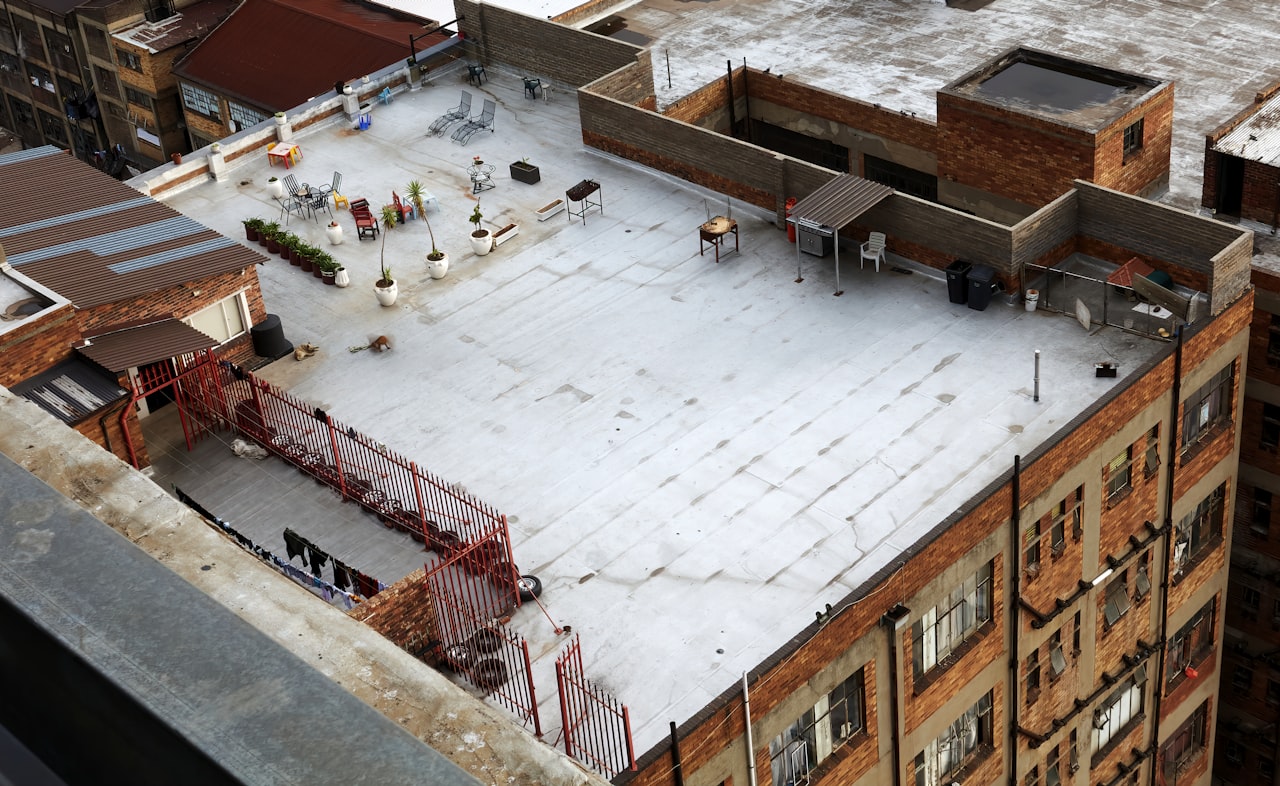
The practical commercial gutter maintenance guide for Rocklin's busiest retail corridor — Westfield Galleria at Roseville, the Stanford Ranch retail strips, and the pad-site restaurants and shops along Galleria Boulevard, Stanford Ranch Road, and Pleasant Grove. Built for property managers, asset managers, and tenants who need to understand what gets cleaned, who pays, and what shows up on next year's CAM reconciliation.
Commercial gutter maintenance along the Westfield Galleria and Stanford Ranch retail corridor in Rocklin is almost always a landlord-managed, CAM-recovered line item — not something an in-line tenant directly contracts. The landlord (or its property management firm) selects the gutter and roof drainage vendor, schedules quarterly service, and recovers the cost through each tenant's Common Area Maintenance share. The exceptions are pad-site restaurants and big-box anchors, which usually own their roof responsibilities directly, and tenant-caused clogs (grease, packaging, HVAC debris), which get back-charged to the offending tenant. Parapet scuppers stay on the landlord side. Restaurant grease clogs do not.
That's the short version. The longer version — the part that matters when you're reviewing a CAM reconciliation that jumped $0.42 per square foot year-over-year, or when a tenant complaint about a leaking ceiling at the Galleria food court turns into a finger-pointing exercise between three different vendors — needs you to understand parapet scupper systems, restaurant grease ducting, the way Roebbelen Group and other regional property managers structure retail contracts, and the quarterly cleaning frequency that actually works in Sacramento Valley's wet-dry climate.
This guide is built around that operational reality. We've serviced commercial properties along the Galleria/Stanford Ranch corridor for the better part of a decade, and the gap between what a lease says and what actually happens during a December atmospheric river is wider than most tenant reps appreciate.
TL;DR for Rocklin Retail Property Managers and Tenants
- Who handles it: Landlord/property manager contracts the work; cost flows to tenants through CAM.
- Cleaning frequency: Quarterly minimum on retail; monthly for pad-site restaurants with rooftop grease exhaust.
- Parapet scuppers: Landlord responsibility (structural drainage); tenants pay through CAM unless they caused the clog.
- CAM gutter line item: Typically $25–$60/yr per inline tenant in a Galleria-scale center; $1,800–$4,500/yr for a 4–8K sq ft pad.
- Restaurant grease: Single biggest cause of scupper and downspout failure on retail roofs; needs monthly attention.
- Insurance: Require $2M general liability, CSLB C-43 or B license, additional insured endorsement, OSHA fall-protection plan.
The Westfield Galleria / Stanford Ranch Retail Corridor in Context
The retail corridor anchored by Westfield Galleria at Roseville and the Stanford Ranch shopping centers is one of the densest commercial real-estate clusters in Placer County. Westfield Galleria itself is a roughly 1.4-million-square-foot super-regional mall that sits at the I-80/Galleria Boulevard interchange, technically just inside the Roseville city line but functionally the gravitational center of Rocklin retail. From that anchor, the corridor extends west along Stanford Ranch Road, north into the Stanford Ranch and Whitney Ranch retail strips, and east along Pleasant Grove Boulevard toward Sunset Boulevard and the Highway 65 commercial frontage.
From a gutter and drainage perspective, that geography matters because it stacks four high-risk conditions on top of each other:
Approximate Retail Buildout, Galleria/Stanford Ranch Corridor
The other condition this geography stacks: oak trees. Stanford Ranch was developed on what was historically oak-dotted granite-bedrock terrain, and the city of Rocklin's Oak Tree Ordinance preserves significant heritage canopy across the corridor. Beautiful for shoppers, but every November the same trees drop millions of leaves and acorns onto retail roofs. Stanford Ranch retail buildings sit downwind of mature valley oaks more often than they don't. For deeper background on how that ordinance shapes maintenance choices, see our piece on the Rocklin Oak Tree Ordinance and gutters.
On the residential cousin side, the same neighborhood backdrop is documented in our Stanford Ranch Mediterranean and Tuscan home gutter guide — the homes share the corridor's tile-roof and tree-canopy profile but on a much smaller scale.
Local context, from our service logs: the Galleria/Stanford Ranch corridor has more rooftop HVAC units per square foot than almost any commercial cluster we work in. Every HVAC unit is a potential source of condensate, refrigerant-line packaging, fastener debris, and old filters that end up at a downspout intake. We catalogue rooftop HVAC density as a primary cost driver on every commercial bid.
Who Actually Handles Gutter Maintenance at Galleria-Scale Retail
At a regional mall the scale of Westfield Galleria, the day-to-day gutter and roof drainage decision rarely involves the named tenants on the doors. The chain runs roughly like this:
1Mall ownership / REIT
Sets the operating budget and the standard for vendor qualifications, insurance, and reporting cadence. For Galleria-class properties, that's an institutional owner with a national maintenance playbook.
2On-site general management
The mall's GM and engineering team make the actual vendor selection from a pre-qualified list. They run the bid every 1-3 years and authorize quarterly visit schedules and emergency dispatch.
3Roof and gutter contractor (us, or a peer)
Executes the contract: quarterly cleaning, scupper inspection, condition reports, photo documentation, after-hours storm response. We coordinate with the roofing contractor (often a different vendor) and the rooftop HVAC contractor.
4Tenants
Pay for it through CAM. Get copied on incident reports only when something goes wrong. Have direct contracting responsibility only for tenant-installed rooftop equipment, hood/exhaust systems, and anything caused by their operations.
5Pad-site exceptions
Single-tenant pad buildings (drive-thru restaurants, banks, standalone retail) often have ground leases or NNN structures where the tenant directly handles roof and gutter maintenance, sometimes selecting the contractor independently.
For Stanford Ranch strip centers and pad-site complexes off Stanford Ranch Road and Pleasant Grove Boulevard, the chain compresses. A typical 60,000–180,000 square foot neighborhood retail center is managed by a regional property management firm (Roebbelen Group is one of the larger local operators; Donahue Schriber, Vestar, and several private LPs handle others). The on-site property manager often runs a much shorter bid list — sometimes a single-source preferred vendor relationship — and the vendor coordinates directly with tenants on access and parking-lot staging.
If you're a property manager building a vendor short-list, our commercial gutter bid specifications RFP template is the bid document we use as a baseline.
Property Manager Tip
When you assume property management for an existing Rocklin retail center, the first gutter-related question to ask is: do we have current photo documentation of every roof drain, scupper, and downspout discharge point on this property? If the answer is no, your inherited maintenance contract is opaque. Get a baseline inspection done in the first 30 days. We've walked onto properties where the “quarterly cleaning” visits had been skipping a third of the drains for years because nobody had a map of where they were.
Parapet Scupper Systems: Why Retail Roofs Drain Differently
A residential gutter system is, structurally, very simple: a sloped roof sheds water to a perimeter gutter, which carries it to downspouts, which discharge it at grade. Most retail commercial roofs along the Galleria/Stanford Ranch corridor work differently. The roof is flat or low-slope, ringed by a parapet wall that hides rooftop equipment from the street view. Rainwater is captured by internal roof drains in the field of the roof, with overflow scuppers cut into the parapet as a backup.
That two-stage drainage logic is required by California Plumbing Code and is the structural reason why retail roofs survive Sacramento Valley storms at all. Here's the breakdown:
| Drainage Component | Function | Failure Mode | Cleaning Notes |
|---|---|---|---|
| Primary roof drain | Internal drain piped through interior of the building to storm sewer | Leaf, packaging, or grease clog at strainer | Quarterly clean & flush; lift strainer for inspection |
| Overflow scupper | Parapet-wall cutout that releases water if primary drain fails | Plugged by debris pushed up against parapet by wind/water | Quarterly visual + tape-measure clearance check |
| Scupper conductor head | Box collector outside parapet that ties scupper to downspout | Loose strap, corrosion, leaves jammed at outlet | Inspect annually; clean as needed |
| External downspout | Carries overflow water down exterior wall | Crushed by delivery vehicles, separated at seams | Visual quarterly; flush annually |
| Perimeter gutter (where present) | Some retail buildings use eave gutters on low slopes | Pine needle / oak leaf accumulation | Quarterly clean by hand, no leaf-blower shortcut |
The crucial point: overflow scuppers are not optional aesthetics. They're the building's last line of defense before water finds the path of least resistance — which on a flat retail roof is usually an HVAC curb, a skylight flashing, or a service penetration that drips water directly into the tenant space below. Building codes require scuppers because primary drains fail. The whole point of the system is that something has to give before the membrane fails or the deck collapses under ponded water.
For a deeper technical look at flat-roof drainage, our flat-roof gutter and scupper drainage guide covers materials and installation. And on the lower-slope eave-gutter cases (more common on older Galleria-corridor strip centers built in the 1980s and 1990s), our box-gutter and built-in-gutter guide is the reference.
Typical Retail Roof Drainage Failure Sequence
Tenant vs Landlord Responsibility — Lease Reality Check
Lease language is where the abstract gets specific. Most Galleria-corridor retail leases follow one of three structures, and the gutter / scupper / drain responsibility split shifts with each.
| Lease Structure | Gutter/Drain Responsibility | Cost Recovery | Common Use Case |
|---|---|---|---|
| Inline shop NNN | Landlord (structural drainage) | CAM, prorated by GLA | Most Galleria inline shops, strip-center inline |
| Pad-site NNN | Tenant (often direct) | Tenant pays vendor directly | Drive-thru pads, standalone restaurants |
| Ground lease | Tenant (owns improvements) | Tenant absorbs fully | Bank pads, big-box anchors |
| Modified gross | Landlord (split) | Base year expense stop | Older Stanford Ranch retail; rare in new builds |
| Tenant-caused damage | Tenant (regardless of base structure) | Back-charged + insurance | Grease clogs, hood debris, equipment damage |
The chronic confusion in Rocklin retail is around the grease-clog scenario. A landlord-paid maintenance contract found and cleared a clog. The clog was caused by tenant operations. The landlord pays the vendor and then back-charges the tenant. From the tenant's perspective, it looks like a surprise invoice for work they didn't order. From the landlord's perspective, it's a tenant-caused expense that doesn't belong in CAM. Both are right. The fix is documentation and clear lease language — not negotiating it after the invoice lands.
Pad-site tenants and franchisees in particular: read your lease's “maintenance and repair” section before you sign or renew. The default for many ground leases and NNN pad leases is that everything from the roof up is the tenant's problem — gutters, scuppers, drains, membrane, HVAC, the works. If you operate a quick-service restaurant on a pad along the Galleria corridor, you may be on the hook for roof drainage maintenance even though you don't own the building.
Tenant Tip
If your lease puts roof and gutter responsibility on you (which is common for pad sites and big-box anchors), get the same level of contractor scrutiny the landlord uses: $2M general liability, CSLB C-43 or B license, additional insured naming you and the landlord, and quarterly visit minimum. Don't hire residential contractors for commercial pad-site work; they typically don't carry the right insurance and have no experience with parapet scuppers or grease environments.
CAM Cost Breakdowns: What Tenants Actually Pay
Common Area Maintenance is the catch-all line item where retail gutter and drainage costs hide. For Galleria-corridor properties, tenant CAM bills typically run $4–$12 per square foot per year all-in (parking lot, landscaping, security, common-area utilities, management fees, and roof/gutter combined). Gutters specifically are a small but meaningful slice.
Gutter/Drainage Share of Annual CAM, Typical Rocklin Retail Center
On a 200,000 square foot center, roof and drainage together are typically 3–5% of the CAM line, of which gutters and scuppers are perhaps half. That works out to a per-tenant gutter cost in the $25–$60 per year range for a small inline shop — a number that's nearly invisible until the year a major scupper replacement or after-storm event drops a $0.15-per-square-foot true-up across every tenant in the center.
Pad-site economics look very different. For a typical 4,000–8,000 square foot pad-site retail building:
| Pad-Site Profile | Annual Gutter/Drainage Budget | Visits | Drivers |
|---|---|---|---|
| Retail/bank, 4K-6K sqft | $1,800–$3,000 | Quarterly | Light debris, low HVAC count |
| Quick-service restaurant | $3,500–$5,500 | Quarterly + monthly grease check | Rooftop grease exhaust, food packaging |
| Sit-down restaurant | $4,000–$6,500 | Monthly | Heavy grease, multiple HVAC, hood exhaust |
| Junior anchor 15K-25K sqft | $5,500–$10,000 | Quarterly + storm response | Long perimeter, multiple roof drains |
| Big-box anchor 60K+ sqft | $12,000–$25,000+ | Bi-monthly to monthly | Internal drains, multiple membrane levels |
Multi-property portfolios negotiate discounts. A property manager handling 6–8 retail centers across the Galleria/Stanford Ranch corridor can routinely command a 15–25% reduction off list pricing in exchange for guaranteed volume, single point of contact, and master service agreement terms. We've held those agreements with regional property managers, and they substantially reduce per-property administrative load on both sides.
For deeper cost analysis at the contract level, the commercial gutter maintenance Rocklin and Roseville guide covers ROI math and full pricing benchmarks. The HOA-adjacent multifamily side is covered in our commercial and HOA gutter maintenance operations guide.
The Restaurant Grease Problem (and How It Cracks Roofs)
Among the dozens of pad-site and inline restaurants along the Galleria/Stanford Ranch corridor, rooftop grease exhaust is the single biggest accelerant of premature roof drainage failure. The basic physics: a commercial kitchen hood exhausts grease-laden vapor through a rooftop fan. Some of that grease condenses on the fan housing, the surrounding membrane, and the parapet wall. In hot Sacramento Valley summers, it pools and migrates. In winter rains, it gets carried toward the lowest point on the roof — which is, by design, the drain or scupper.
What we've pulled out of Stanford Ranch and Galleria-adjacent restaurant downspouts and scupper boxes, over the years:
- Solid grease-and-cardboard plugs — 3 to 5 feet long, weighing 15+ pounds, lodged at the bottom of a downspout. Required an auger plus hot-water flush to clear.
- Asphalt-shingle-style grease mats — thin black sheets of congealed grease that broke loose from the field of the roof and slid to the drain like a tarp.
- Takeout containers and packaging — rooftop trash from staff smoke breaks that ended up at intakes.
- Hood-exhaust filter debris — old metal mesh filters dropped during maintenance and never retrieved.
- Bird nesting in grease-warmed cavities — a recurring problem where house sparrows and starlings nest in the warm exhaust shadow, dropping nest material into nearby scuppers. California protects active nests; see our bird nesting and California law guide.
The cost of letting it go is severe. A blocked scupper in a December atmospheric river ponds water across the roof. The membrane gets pushed past its design load. Water finds a service penetration, HVAC curb, or flashing seam. The leak shows up on a ceiling tile inside a tenant's leased space. By the time the call comes in, drywall is soaked, ceiling tile is on the floor, and the inventory beneath it — clothing, electronics, food — is damaged. The Insurance Information Institute pegs the average commercial water damage claim at roughly $17,000 (III, 2023). On Galleria-corridor restaurant pads we've seen claims in the $25,000–$60,000 range when the leak hit during peak business hours.
Months Between Grease-Driven Scupper Clogs by Restaurant Type
The takeaway: any retail center with fryer-heavy or grill-heavy restaurant tenants needs monthly scupper inspection, not quarterly. The two-month average time-to-restriction on QSR pads means a quarterly contract will reliably catch the clog only after it's already a problem. Monthly grease checks add roughly 30–40% to annual cost on those pads but cut interior leak risk by an order of magnitude.
Tenant-side, the restaurant's NFPA 96 hood-cleaning schedule is the other half of the equation. A restaurant on a 90-day hood-cleaning cycle drops a fraction of the rooftop grease a restaurant on an out-of-spec 18-month cycle does. If you're the property manager, the hood-cleaning contract is your tenant's responsibility — but you can require evidence of compliance in the lease, and you should.
Retail Cleaning Frequency Table (Quarterly Minimum)
Here's the cleaning cadence we recommend for retail properties along the Galleria/Stanford Ranch corridor. Quarterly is the floor; restaurant-heavy and tree-shaded properties need more.
| Property Type | Minimum Frequency | Recommended | Critical Visit |
|---|---|---|---|
| Inline retail (no restaurant) | Quarterly (4x) | Quarterly | October pre-rain |
| Inline retail w/ food service | Quarterly | Bi-monthly (6x) | October + January |
| Pad-site QSR / fryer-heavy | Bi-monthly | Monthly (12x) | All Oct-Mar visits |
| Pad-site sit-down restaurant | Bi-monthly | Monthly | All winter visits |
| Big-box anchor | Quarterly | Bi-monthly | October + post-storm |
| Junior anchor w/ HVAC density | Quarterly | Bi-monthly | October pre-rain |
| Mall pad / food-court adjacent | Bi-monthly | Monthly | All winter visits |
The October pre-rainy-season visit is the one that's non-negotiable across every property type. By mid-November, atmospheric river risk is real, and a roof that goes into the wet season with clogged scuppers is a roof that ends up in claims. Our atmospheric river gutter prep guide details the storm-readiness checklist we run on every commercial property before December 1.
On the residential adjacent side, the equivalent seasonal logic is in our fall and winter gutter preparation checklist — the same physics, just on different roof systems.
Property Management Context: Roebbelen Group and Regional Operators
Commercial real estate along the Galleria/Stanford Ranch corridor is split among a handful of operators. Roebbelen Group is one of the better-known regional property management and construction firms in Placer County, with offices in Rocklin and a portfolio that touches both commercial and institutional property. Donahue Schriber, Vestar, Regency Centers, and several private LPs manage other portions of the corridor. Westfield (now Unibail-Rodamco-Westfield) handles the Galleria itself.
From a gutter-vendor perspective, the operating differences matter:
National vendor lists, formal RFPs every 2–3 years, $2–$5M insurance minimums, dedicated facilities engineering team. Slower onboarding; predictable contracts.
Local relationship, vendor relationships span 5–10 years, single point of contact, faster decision making. Roebbelen Group and similar firms fall here.
Direct relationship with property owner. Often cost-sensitive, occasionally undermaintained. Lots of pad-site retail along Stanford Ranch falls here.
National facilities team selects vendors via portal; PO-based work orders; rigid scope. Walmart, Target, Costco-style operations.
For a contractor responding to bids, each operating model has its own onboarding rhythm. For a property manager taking on a new portfolio, the operating model dictates how much of the gutter program can be standardized vs. customized per asset.
Contractor Standards for Commercial Retail
A gutter contractor servicing Galleria-corridor retail needs to clear a higher bar than residential. Here's what a property manager should require and what a tenant on a pad-site lease should verify before signing a maintenance agreement:
1California CSLB license
Active C-43 (Sheet Metal) or B (General Building) classification, verified at cslb.ca.gov. License number on every invoice and proposal.
2Insurance: $2M general liability
Commercial general liability with a $2M per-occurrence minimum (residential standard is $1M; commercial owners almost always require $2M). Auto liability $1M. Workers' comp at statutory limits. Additional insured endorsement naming the owner and management company on a primary and non-contributory basis. ACORD 25 COI plus the actual endorsement documents.
3OSHA fall protection plan
Written site-specific fall protection plan for any work over 6 feet. OSHA 10 or 30 crew certifications. Boom lift / aerial work platform certification where used. This is non-negotiable on any property over one story.
4Photo documentation standard
Before-and-after photos of every drain, scupper, and downspout serviced. Uploaded to a shared portal or drive within 48 hours of each visit. Time-stamped. Geotagged where possible.
5Written condition reports
Within 48 hours of each visit, a written report listing every drain serviced, every defect observed, and recommended repairs with priority ranking. Property managers should expect to receive a structured PDF, not a one-line email.
6Emergency storm response
Pre-negotiated response time (4 hours for active leak; 24 hours for non-emergency overflow), after-hours rate schedule, weekend and holiday coverage during the November–March rainy season.
7Repair pre-authorization threshold
In-scope repair allowance per visit (typical $150–$250) so minor issues get fixed without paperwork. Anything above the threshold requires photo documentation and a separate quote.
8Coordination with other roof vendors
Documented willingness to coordinate with the property's roofing contractor, HVAC contractor, and hood-cleaning contractor. On Galleria-scale properties, there are often 4–6 different vendors with rooftop access; the gutter contractor needs to play well with all of them.
For the full procurement framework, see our commercial gutter bid specifications guide. For background on contractor selection more broadly, the how to choose a gutter company in Sacramento piece covers the residential-to-commercial bridge.
Managing a retail center, pad site, or restaurant pad along the Galleria/Stanford Ranch corridor? We service commercial properties across this exact geography — quarterly contracts, monthly grease management on restaurant pads, October storm prep, scupper rebuilds, after-hours response. If you want a compliant bid that matches the spec in this guide, we'll respond in three business days.
Request a commercial quoteFAQ: Galleria-Corridor Gutter Maintenance
Who handles commercial gutter maintenance at Westfield Galleria?
Westfield Galleria at Roseville handles common-area roof and gutter maintenance at the landlord level through the mall's property management group, with costs flowed back to tenants via the CAM (Common Area Maintenance) charge on each lease. Inline shop tenants generally do not directly contract for gutter cleaning. In-line restaurants and pad sites with their own roofs and parapet scuppers usually have a hybrid arrangement: landlord owns the structure, tenant pays a prorated share, and any tenant-caused clog (typically grease, food packaging, or rooftop HVAC debris) is back-charged to that specific tenant. Adjacent Stanford Ranch retail centers along Stanford Ranch Road, Pleasant Grove Boulevard, and Sunset Boulevard follow the same general split, with property management groups including Roebbelen Group, Donahue Schriber, and several private LPs handling vendor selection for the landlord-controlled portion.
Are parapet scuppers a tenant or landlord responsibility?
In almost every Rocklin retail lease we've seen, parapet scuppers (the wall-mounted overflow drains that pierce a roof's parapet wall to release water when the primary roof drains back up) sit on the landlord side of the responsibility ledger as part of the building shell. The lease language usually classifies the parapet wall, roof membrane, and structural drainage components as landlord-maintained, with costs recovered through CAM. Tenants are typically responsible for anything they install on the roof (HVAC condensate lines, grease ducts, satellite dishes) and for any blockage caused by tenant operations. So if a Stanford Ranch sushi restaurant clogs an overflow scupper with takeout-container plastic from a rooftop bin, the landlord performs the work, but the back-charge lands on that tenant. Always read your specific lease — anchor and big-box leases occasionally pull the roof and drainage into the tenant's column in exchange for a lower base rent.
How often should retail gutters be cleaned in Rocklin?
Retail commercial gutters in Rocklin should be cleaned at minimum quarterly — every three months — with a more aggressive schedule for properties along the Galleria/Stanford Ranch corridor that combine heavy oak tree canopy, restaurant tenants, and high rooftop HVAC density. Recommended cadence: October pre-rainy season (the non-negotiable visit), January mid-rain inspection, April pollen-and-pine-needle cleanup, and July rooftop check for HVAC debris and bird nesting. For pad-site restaurants with rooftop grease exhaust, monthly hood-and-gutter coordination is the safer standard. Multi-tenant strip centers with parapet roofs need scupper inspection on the same quarterly cadence — a single blocked overflow can pond water across hundreds of square feet of single-ply membrane in under a day during a Sacramento Valley atmospheric river.
What is included in CAM gutter charges for Rocklin tenants?
Common Area Maintenance (CAM) gutter charges in Rocklin retail centers typically include scheduled cleaning visits (2–4 per year per the maintenance contract), downspout flushing, parapet scupper inspection, photo documentation, written condition reports, and small in-scope repairs under a not-to-exceed threshold (commonly $150–$250 per visit). CAM generally excludes full gutter replacement, scupper rebuilding, roof membrane work, tenant-caused damage, after-hours emergency response, and capital improvements. Reconciliation is annual: the landlord bills estimated CAM monthly and trues up at year-end. Tenants pay a prorated CAM share based on their leased square footage divided by the gross leasable area, which means a 2,500 sq ft inline shop in a 200,000 sq ft center carries roughly 1.25% of the center's annual gutter and drainage CAM — usually $25–$60 per year per tenant for routine work, more if the tenant operates a high-debris use like a restaurant or pet store.
How do restaurant grease and food debris affect retail gutters?
Restaurant operations are the single biggest accelerant of gutter and scupper failure on Rocklin retail roofs. Grease from rooftop kitchen exhaust hoods accumulates on the roof membrane and migrates toward drains during rainfall, congealing into a tar-like layer that catches leaves, paper, and HVAC debris and forms hard plugs in downspouts and scuppers. We've extracted clogs from Stanford Ranch and Galleria-adjacent pad-site restaurants that included a solid grease-and-cardboard mass several feet long, weighing 15+ pounds, requiring an auger and hot-water flush to clear. The fix is twofold: tenant-side, the restaurant should be on a documented hood-cleaning schedule (NFPA 96 dictates frequency tied to cooking volume), and landlord-side, the maintenance contract should include monthly visual checks at the drain points on any pad with food-service tenancy. Skipping either side leads to interior-leak claims that routinely run $8,000–$25,000 per event.
What is the typical commercial gutter maintenance cost for a Galleria-adjacent pad site?
For a typical 4,000–8,000 square foot pad-site retail building along the Westfield Galleria and Stanford Ranch corridor in Rocklin, annual gutter and drainage maintenance budgets fall in the $1,800–$4,500 range for a quarterly service contract covering cleaning, downspout flushing, parapet scupper inspection, condition reports, and minor in-scope repairs. Single-tenant pads with restaurant operations land at the high end ($3,500–$5,500) due to grease management. Larger anchor pad sites (15,000–25,000 sq ft) typically budget $5,500–$10,000 annually. Pricing is driven by linear footage of perimeter gutter, number of internal roof drains and overflow scuppers, building height, and rooftop HVAC density. Multi-property portfolios at the Galleria scale (50+ tenants) negotiate 15–25% off list pricing.
Service Bid for Galleria, Stanford Ranch, or Pleasant Grove Retail?
We service commercial retail properties across the Westfield Galleria and Stanford Ranch corridor — quarterly cleaning contracts, monthly restaurant pad service, parapet scupper rebuilds, after-hours storm response, and all the documentation your CAM reconciliation actually needs. Property managers, asset managers, and pad-site tenants: send us a property list and we'll respond with a compliant bid in three business days.
Bottom Line for Property Managers, Asset Managers, and Tenants
The Galleria/Stanford Ranch retail corridor has a distinct commercial gutter and drainage profile: flat or low-slope membrane roofs, parapet scupper overflow systems, dense rooftop HVAC, restaurant grease load, oak canopy debris, and Sacramento Valley atmospheric-river exposure. Get any one of those wrong and the maintenance contract underperforms. Get all of them right and your tenants never notice the system exists — which is exactly how a well-run retail center should feel.
For property managers and asset managers, the practical playbook: quarterly minimum cleaning on every retail property, monthly on restaurant-heavy pads, October pre-rain visit non-negotiable, $2M insurance and CSLB licensing as the contractor floor, written condition reports after every visit, photo documentation in a shared portal, and grease-driven back-charges built into your tenant lease language.
For tenants — especially pad-site franchisees and restaurant operators — the playbook is: read your lease's maintenance and repair section before signing, ask what's in CAM and what isn't, get on a documented NFPA 96 hood-cleaning schedule, keep your rooftop trash inside the building, and don't hire residential gutter contractors for pad-site work.
Do all of that, and the worst Sacramento Valley storm becomes a routine Monday. Skip pieces of it, and the December atmospheric river becomes the most expensive 18 hours of your year.
Related Articles
Commercial Gutter Bid Specifications: RFP Template & Scope
The RFP template, scope of work, and pricing benchmarks for Rocklin and Roseville property managers writing a commercial gutter bid.
Commercial Gutter Maintenance Cost & ROI Guide
Annual cost benchmarks, ROI math, and contractor selection for commercial property maintenance across Rocklin and Roseville.
Flat Roof Gutter and Scupper Drainage Solutions
Materials, installation, and failure modes for the parapet scupper systems that define commercial retail roofs.
Commercial & HOA Gutter Maintenance Operations Guide
Operations playbook for the HOA and multi-family side of commercial property maintenance.
Stanford Ranch Mediterranean & Tuscan Home Gutters
Residential cousin to this guide — same neighborhood, different roof type and gutter profile.
Atmospheric River Gutter Prep for Placer County
Storm-readiness checklist for the December and January back-to-back rain events that define Sacramento Valley winters.
Sources & References
- • Insurance Information Institute, “Commercial Property Claims Data,” 2023 — iii.org
- • National Roofing Contractors Association (NRCA), “Roof Drainage and Building Performance,” 2024 — nrca.net
- • NFPA 96, “Standard for Ventilation Control and Fire Protection of Commercial Cooking Operations” — nfpa.org
- • California Plumbing Code, Chapter 11 — Storm Drainage
- • California Contractors State License Board (CSLB) — cslb.ca.gov
- • City of Rocklin Commercial Property Inventory, 2024-2025 — rocklin.ca.us
- • OSHA 29 CFR 1926 Subpart M — Fall Protection Standards
Last updated: May 14, 2026 | Serving commercial retail properties along the Westfield Galleria and Stanford Ranch corridor in Rocklin, Roseville, Lincoln, Granite Bay, and across Placer County, California